

What is dry needing?
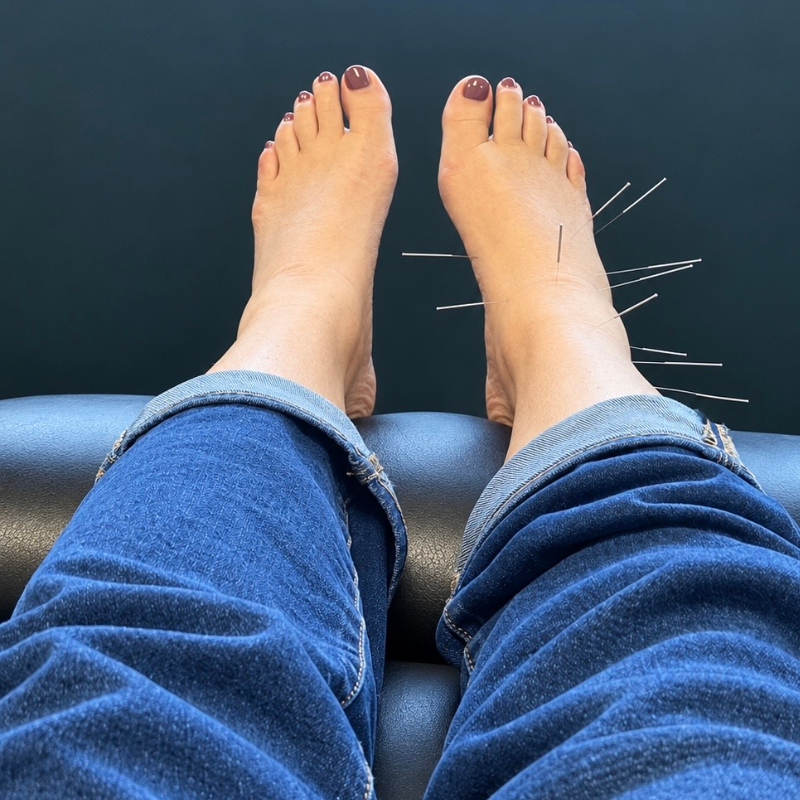
Dry needling is a technique used by Chiropractors and other physical therapists whereby a very fine needle is inserted into a myofascial trigger point, or tight muscle to alleviate pain. A trigger point represents an area of increased nervous system activity in a muscle, which causes tension to develop in the rest of the muscle and in the tissues surrounding it. Dry needling can also be used to treat dysfunction within tendons and ligaments.
How does it work?
Dry needling helps to relieve tension in muscles by activating spinal cord reflexes brought about by eliciting a local twitch response in the tight muscle fibres. Through this stimulation, the needle can help to break the neurological pain cycle.
Secondly, dry needling also has a biochemical effect whereby through the needle stimulus, pain relieving endorphins are released. In conjunction to this, there is an associated improvement in blood flow and oxygen supply to the muscle as a result of the body’s natural reaction to the stimulus. In summary, dry needling facilitates neurological and mechanical muscle tension release, along with an increase in blood flow, and together these optimize the bodys natural healing capcity in the stimulated tissue.
Does it hurt?
Some people feel a little pinch as the needle goes through the skin, however as the needle is so fine a lot of people feel nothing at all. Once the needle reaches its target, pain may be felt as a very minor electric stimulation, a mild cramp or a deep ache, which usually lasts less than 10 seconds.
What is the difference between Dry Needling and Acupuncture?
In short, the philosophy of Acupuncture is built on Eastern Chinese medicine philosophies and places needles in specific locations based on meridian lines to stimulate energy flow (Chi). There is no science to explain accupunture, and thus a belief system.
Dry needling on the other hand is scientifically researched and proven. Dry needling is a musculoskeletal therapy that has a specific scientific effect that can be objectively measured in the relief of muscular pain and discomfort.
What is it used for?
Dry needling can be used for many different conditions and can be used in conjunction with Chiropractic techniques.
An example of some of the conditions that respond well to dry needle therapy:
- rotator cuff tendonitis
- tennis elbow
- neck tension
- tension headaches
- postural strain
- lower back pain
- IT Band Pain/ syndrome
- calf tension