
How Can a Chiropractor Help with a Herniated Disc?
Chiropractic care is a non-invasive, safe, and effective option for restoring misaligned vertebrae and treating pain associated with a bulging or slipped (herniated) disc.
Whether you have a disc protrusion or a herniated disc, your first visit should be to a chiropractor.
Chiropractic care may be effective in the treatment of slipped discs, no matter the severity.
Chiropractors specialize in non-invasive, drug-free treatment that focuses on the root of your pain and discomfort rather than simply masking the symptoms. Through a combination of spinal adjustments, flexion-distraction, dry needle and massage therapy, you can experience pain relief, not just at the source of the disc protrusion, but throughout your entire body.
Problems with vertebral discs herniations and protrusions are linked to:
• Sciatic pain
• Lower back pain
• Neck pain
• Pain radiating down the extremities (arms and legs)
• Lack of bowel and bladder control
What Is a Herniated Disc?
Slipped disc. Bulging disc. Disc protrusion. Disc prolapse. Herniated disc.
These terms are often used interchangeably, but none of them present an accurate description of what is happening inside your body.
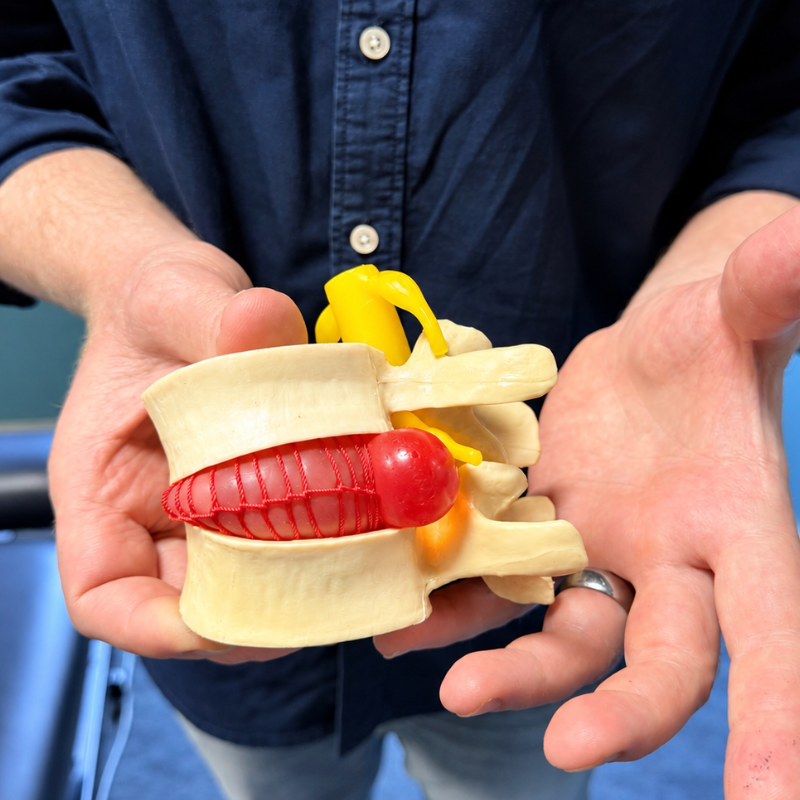
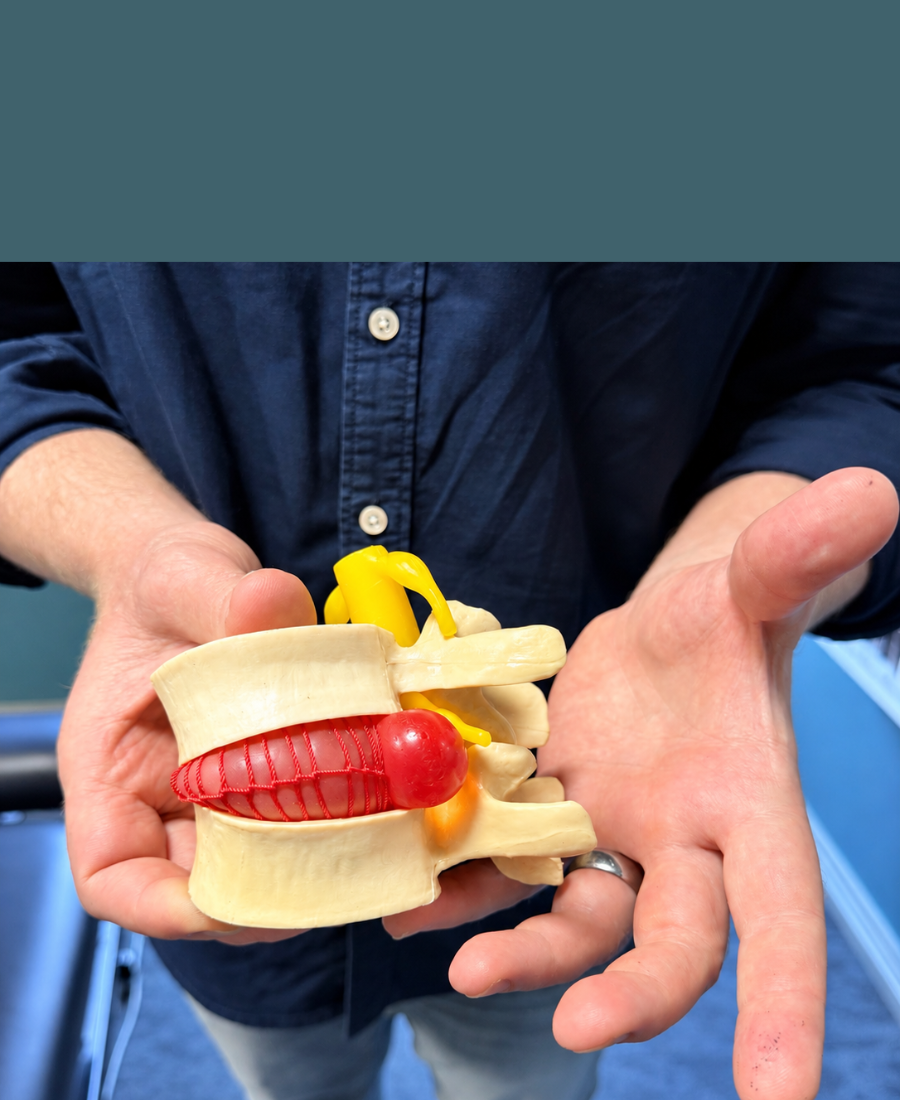
Between each of the vertebrae in your spine, you have a disc made of a soft, spongy material (the nucleus pulposus) inside a membrane (the annulus fibrosus)
Normally, your intervertebral discs are designed to act as a shock absorber and allow your spine to bend, twist, and move without friction. But if there is enough force or pressure, the nucleus pulposus can push against the membrane, causing a disc protrusion (also known as a prolapse or bulging disc).
As we age intervertebral discs lose their elasticity, begin to weaken from degeneration, and become susceptible to injury.
Intervertebral discs are composed of a tough, rubbery outer membrane (annulus) surrounding a soft, jellylike center (nucleus). A bulging disc is when the outer annulus begins to bulge out of the vertebral space in a fairly even circumference. A herniated disc, often called a slipped disc, occurs when some of the nucleus pushes out through a tear in the annulus to irritate the surrounding tissues and nerves. Herniated discs are more likely to cause pain because they generally protrude further than a bulging disc and impact nearby nerve roots.
Common Symptoms of Disc Protrusion or Herniation
Local or referred pain.
Depending on the location of the herniated disc and whether or not it is pressing against a nerve root you may feel pain in the neck, mid-back, lower back, or sacrum that refers to a correlating extremity. For instance, if you have a herniation between your L4-L5 (low-back, lumbar region) then pain may refer to the buttocks, thigh, and calf.
• Numbness or tingling. Due to nerve irritation, people with a herniated disc often have localized or referred numbness, tingling, and/or radiating pain.
• Weakness. Muscle weakness can occur due to compromised nerve(s). An example would be a loss of hand grip strength due to a herniated disc in the neck.
Once diagnosed correctly, bulging and herniated discs can be treated by chiropractors and their professional team of specialists through skeletal, muscular, and myofascial manipulations. The following treatment techniques show how a chiropractor near you that specializes in bulging or herniated discs can help restore function and alleviate pain.
The Best Chiropractic Treatments for Bulging & Herniated Discs
There is a common belief that Chiropractors will make your disc protrusion worse. Nothing could be further from the truth!
Chiropractors utilize a comprehensive report of your history, perform a physical examination and take digital images (x-rays or refer for an MRI) to diagnose the specific type of disc problem you are experiencing. In addition to the medical analysis, they factor in your daily habits, physical activity levels, and health history to better understand your total-body health so that they can create an effective, personalized treatment plan.
Spinal Adjustments
Once your condition is properly diagnosed, chiropractors have the ability to skillfully restore misaligned vertebrae and address herniated discs that are putting pressure on nearby nerves. The biomechanical adjustments can lessen pain associated with the compression, ease muscle spasms, promote nerve function once things are realigned, and give patients progressive mobility as their bodies continue to heal. Depending on your level of discomfort and the specific impingement, a chiropractor can apply anything from gentle pressure to a more rigorous adjustment to help give you long-term relief.
Chiropractic Traction Therapy
A common cause of herniation is spinal compression, whereby the discs positioned between the vertebrae naturally become thinner and begin to pinch the nerves. Chiropractors can use traction to stretch, realign, and give more space within the vertebral column to alleviate the affected nerves. The purpose of these techniques is to reverse the natural effects gravity has on the spine and aid in realignment post an injury or accident.
Common treatments for disc injuries involve:
bed rest, pain relievers, anti-inflammatories, steroid injections, intense physical therapy, and surgery. Spinal manipulation, on the other hand, is a non-surgical, drug-free treatment option to address your pain at the source.
Chiropractic care will not reverse the herniation (only surgery can do that), but it can eliminate your painful symptoms so that surgery, drugs, and other treatment options become unnecessary.